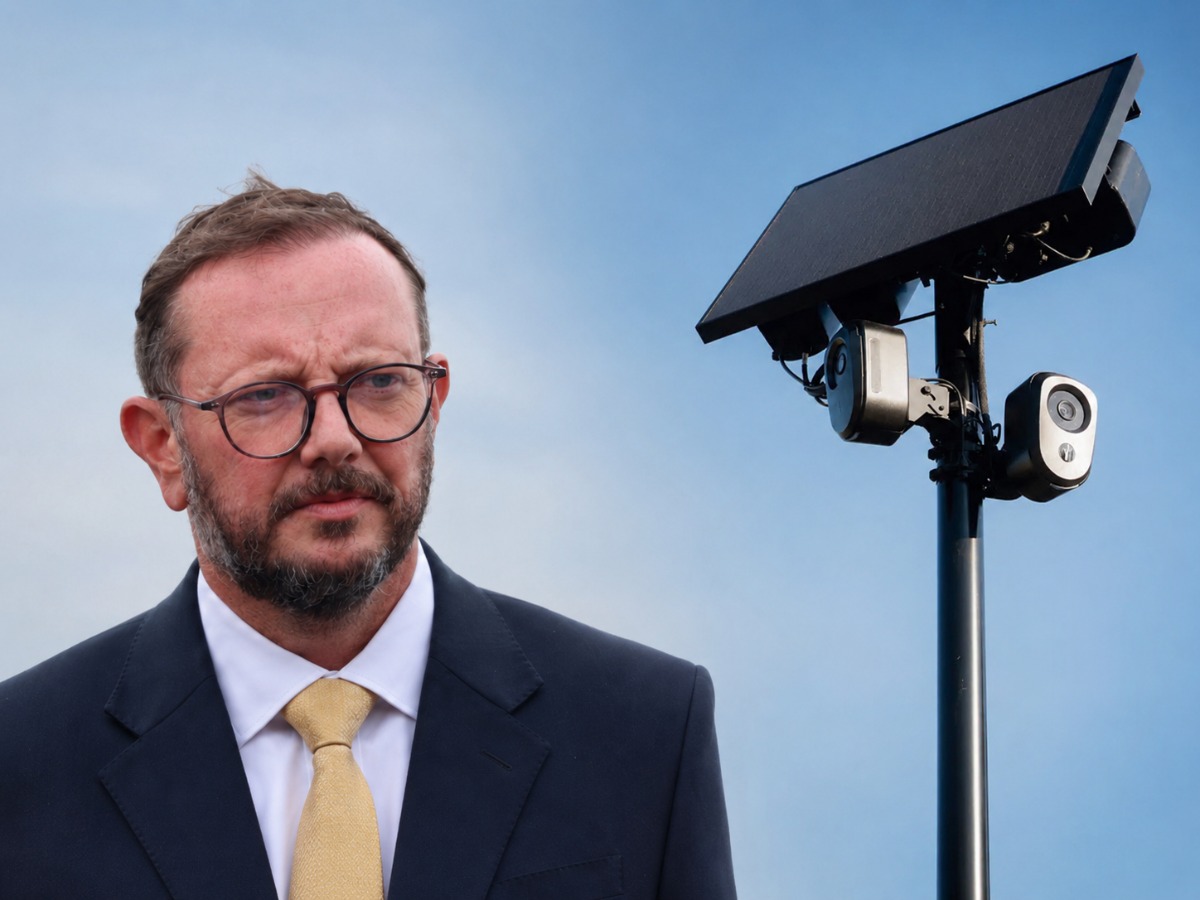
Burlison: Flock cameras are building a searchable map of Americans’ lives
What do you think?
Southwest Missouri Congressman Eric Burlison says the country should “hit the pause button” on rapidly expanding license plate camera networks.
He warns that the technology could allow authorities to track the daily movements of people who are not suspected of crimes.
Burlison joined Kentucky Rep. Thomas Massie in introducing the Flock-Off Act, legislation that would prohibit federal money from being used to purchase, install, operate, or upgrade automated license plate readers and biometric surveillance cameras.
“Technology may change, but our constitutional rights do not,” Burlison said.
During an interview with Newstalk KZRG's Morning Newswatch Friday, Burlison acknowledged that the cameras can be an effective law enforcement tool.
However, he argued that thousands of networked cameras connected to searchable databases present different constitutional questions than an officer observing a vehicle on a public street.
“When you’ve got thousands of them in your community, and they’re all uploading to the same system, law enforcement can search it,” Burlison said. “They can create a pattern of your life.”
Flock Safety says its nationwide network includes more than 120,000 cameras across 49 states. The systems photograph license plates and vehicle characteristics, upload the information to the cloud, and allow participating agencies to search for vehicles connected to investigations.
Burlison said the technology has advanced faster than laws governing its use. He supports requiring investigators to obtain warrants before searching databases for a person’s movements, while also streamlining the warrant process for urgent cases.
The bill itself does not establish a nationwide warrant requirement or outlaw every locally funded camera. Instead, it would cut off federal funding connected to covered systems. Federally funded cameras would have to be removed. In contrast, state and local agencies would have to stop operating federally supported systems within 180 days to continue receiving money through the affected federal program.
The measure also covers contracts, subscriptions, cloud storage and data-sharing arrangements. Exceptions include toll collection and certain cameras operating within 1 mile of the nation’s northern and southern borders.
Burlison said the debate is not about denying police useful technology but placing constitutional limits on how it can be used.
“I don’t want to live in a police state,” Burlison said. “I don’t want to live in a surveillance state.”