Graduate Student's Research Supports Pitt State Baseball's Individualized Pitcher Development Model
What do you think?
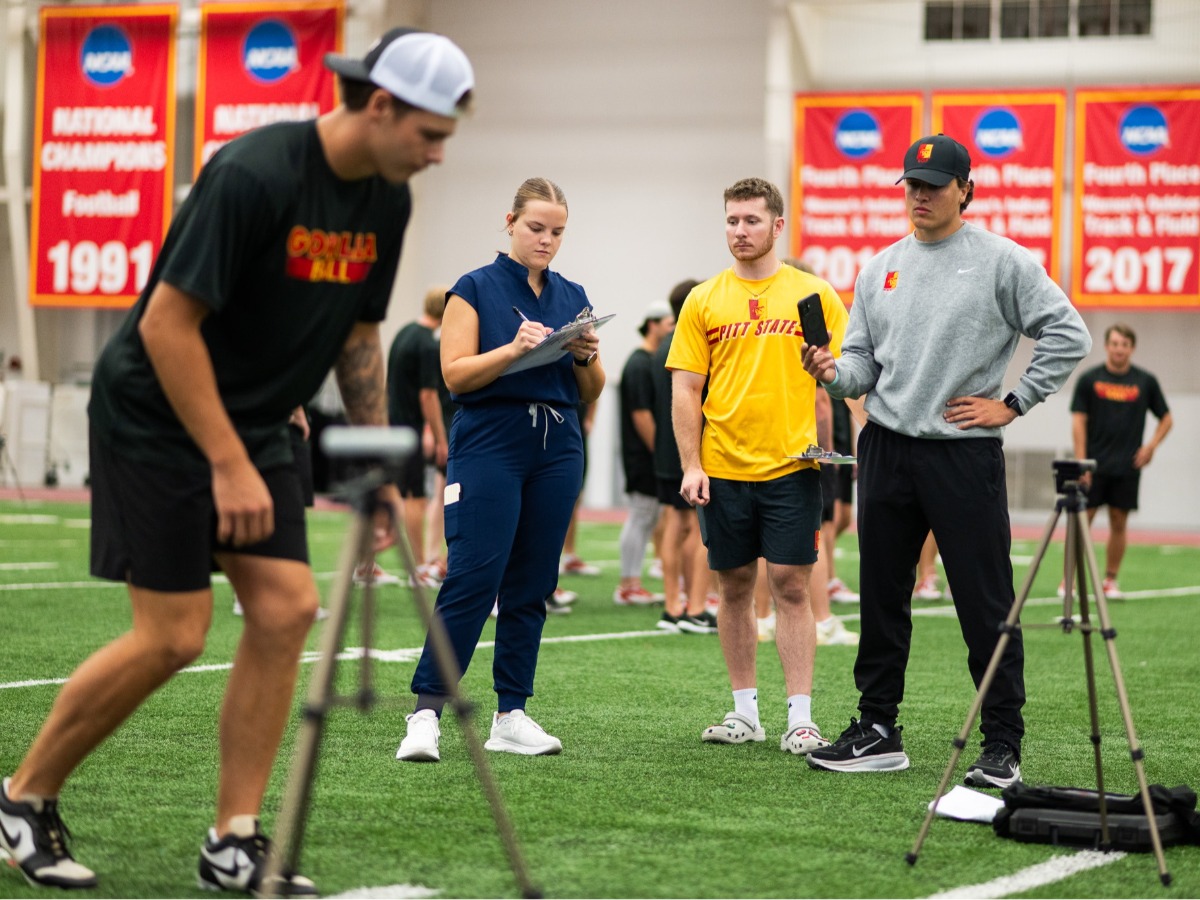
PITTSBURG, KS. --On a typical day, Pittsburg State University pitcher Ryker Curry spends time on the mound throwing bullpen sessions with his teammates. This season, however, his responsibilities extend beyond the field. He is also gathering data, reviewing spreadsheets, conducting research, and helping develop a system focused on enhancing performance and protecting the health of every pitcher on the Gorillas' roster.
Curry's graduate-level Exercise Science research brings together several members of the university community, including Associate Professor David Boffey of Health, Human Performance and Recreation; Assistant Baseball Coach Kody Sindelar; and Strength and Conditioning Coach Beto Montero.
Through this partnership, Curry is applying sports science and baseball analytics to create customized development plans for all 32 pitchers on the team. Although individualized training strategies are increasingly prevalent in Division I programs and professional baseball, they are less common in Division II athletics.
"A lot of technologies have really exploded in baseball," Sindelar said. "A lot of your bigger schools have pitching labs with technology and data. We were able to develop our own version of it here at Pitt State because we have the perfect combination of people and facilities to take it on."
A Personalized Approach to Pitcher Development
The project took shape after Curry, who completed his undergraduate degree in Exercise Science in May and plans to earn his master's degree in 2028, approached Boffey about connecting his academic interests with his experience as a collegiate baseball player.
"He also talked with our coaches about how we could work together to evaluate pitchers and then help improve performance, improve health and wellness, and evaluate injury risk for each one of them," Boffey said. "That collaboration between the Strength and Conditioning program, Gorilla Baseball, and HHPR has been very important."
The team's goal is to move away from generalized training programs and instead establish individualized development plans that address each athlete's strengths, weaknesses, and physical needs.
"Each person's anatomy and physiology is unique. Each person's response to strength and conditioning is unique. We want to improve performance by giving each pitcher specific tools and goals rather than just guessing, rather than just having them all do the same thing," Curry said. "The end goal is to have better, healthier athletes, get more wins, and ultimately get to the World Series."
Collecting and Analyzing the Data
Developing individualized plans begins with a comprehensive assessment of each pitcher. The coaching and strength and conditioning staffs have been gathering information through a variety of physical evaluations and performance-tracking methods.
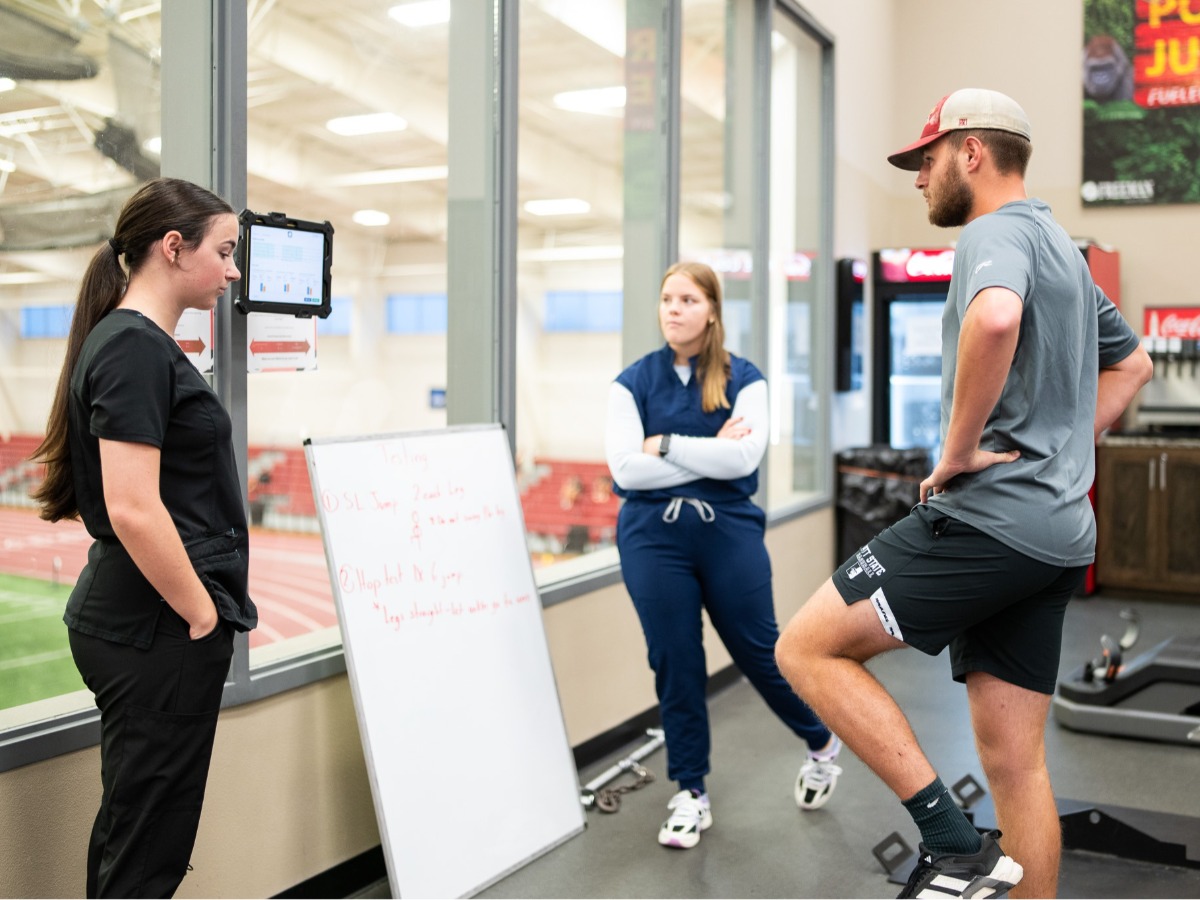
At the Plaster Center, Montero drew on experience gained during a summer with the Atlanta Braves to guide the pitchers through a monthlong process of building foundational strength and speed before testing began.
"Sometimes when you test people right away, they are not ready," he said. "We want to test safely, and get a baseline for everyone at the beginning of the semester."
Boffey and Curry have also been working in the Human Performance Lab to measure body composition, flexibility and mobility, movement mechanics, strength, and other physical characteristics.
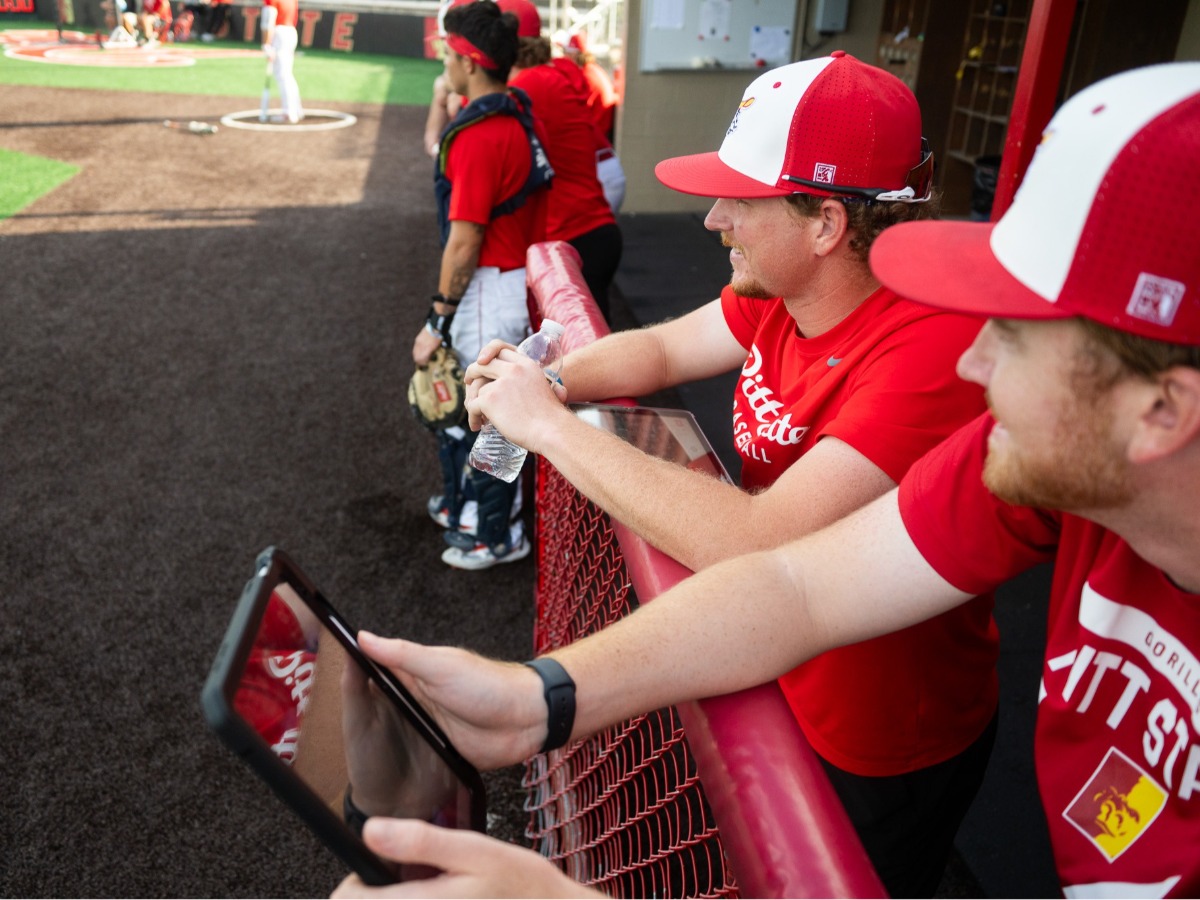
On the baseball field at the Gene Bicknell Sports Complex, coaches use a Rapsodo ball-flight tracking system and an iPad to capture information about each pitch. The technology helps document a pitcher's release, the ball's movement through the strike zone, and its location as it crosses home plate.
By bringing these measurements together, the staff can examine performance patterns and make more informed decisions about training intensity, workload management, injury prevention, and long-term player development.
"We thought if we can find an area of weakness in pitchers that we feel has a direct correlation to performance, we'd attack those weaknesses," Sindelar said.
Building the Player Development Model
One of Curry's biggest responsibilities has been organizing a large volume of measurements into a format that is practical for coaches and players.
"I have a huge spreadsheet of all the numbers," Curry said.
To simplify the information, he created an individualized report for every pitcher, using a format similar to a baseball card. Each report features a color-coded rating system that helps players quickly recognize where they excel and which areas need additional attention.
"Green means you're good, yellow means you could use some work, and red means an area you need to really focus on," Curry said.
Known as the "Player Development Model," the system is designed to account for the fact that pitchers can succeed through different combinations of physical abilities and pitching skills.
"People often talk about speed when it comes to pitchers," Boffey said. "Pitchers may get the ball across the plate at the same speed, but how that ball moves is based on their anatomy, their physiology, and how they themselves move."
Sindelar emphasized that throwing velocity alone does not determine a pitcher's effectiveness.
"We have some guys who are very successful where velocity isn't the main driving force," he said. "Their skill is elite command, being able to throw the ball where they want it, along with having quality secondary pitches."
Physical assessments can also reveal important connections between athletic performance and pitching ability. According to Boffey, strength and explosive-power measurements, including medicine ball throws, are strongly associated with pitching velocity. Evaluating mobility and the ability to generate force can also help staff recognize potential injury concerns.
These findings give coaches the opportunity to design workouts around each pitcher's individual profile, rather than relying on the same training routine for the entire roster.
"Each player is different," Curry said. "The training needs to be specific to what each player needs."
Creating Opportunities Beyond the Field
Montero views the collaboration as an opportunity to connect classroom instruction in Exercise Science with the practical demands of collegiate athletics and strength and conditioning.
"Everyone will benefit from that," Montero said. "It is the application of what they're learning in the classroom, and if we're able to help the future of strength coaches, PTs, and so on, it will make them better and our program better."
For Curry, the project's immediate purpose is to help his teammates perform at their best while establishing a foundation for the future of Gorilla Baseball.
"We're basing this model on what private facilities, DI programs, and pro organizations are doing," he said. "The gold standard is individualized training."
The experience is also helping Curry prepare for a career in baseball analytics and player development, where he hopes to apply his research in a professional setting.
"I'd love to work with pro organizations," he said. "I'm hoping to be able to present this to an organization and say, 'This is what I've done, and I can do it for you'."
Sindelar is optimistic about Curry's potential and the opportunities ahead of him.
"Ryker is a special young man and has a really bright future," the coach said.
